CWI Symposium 2026: a decade of wireless innovation and the road to 6G
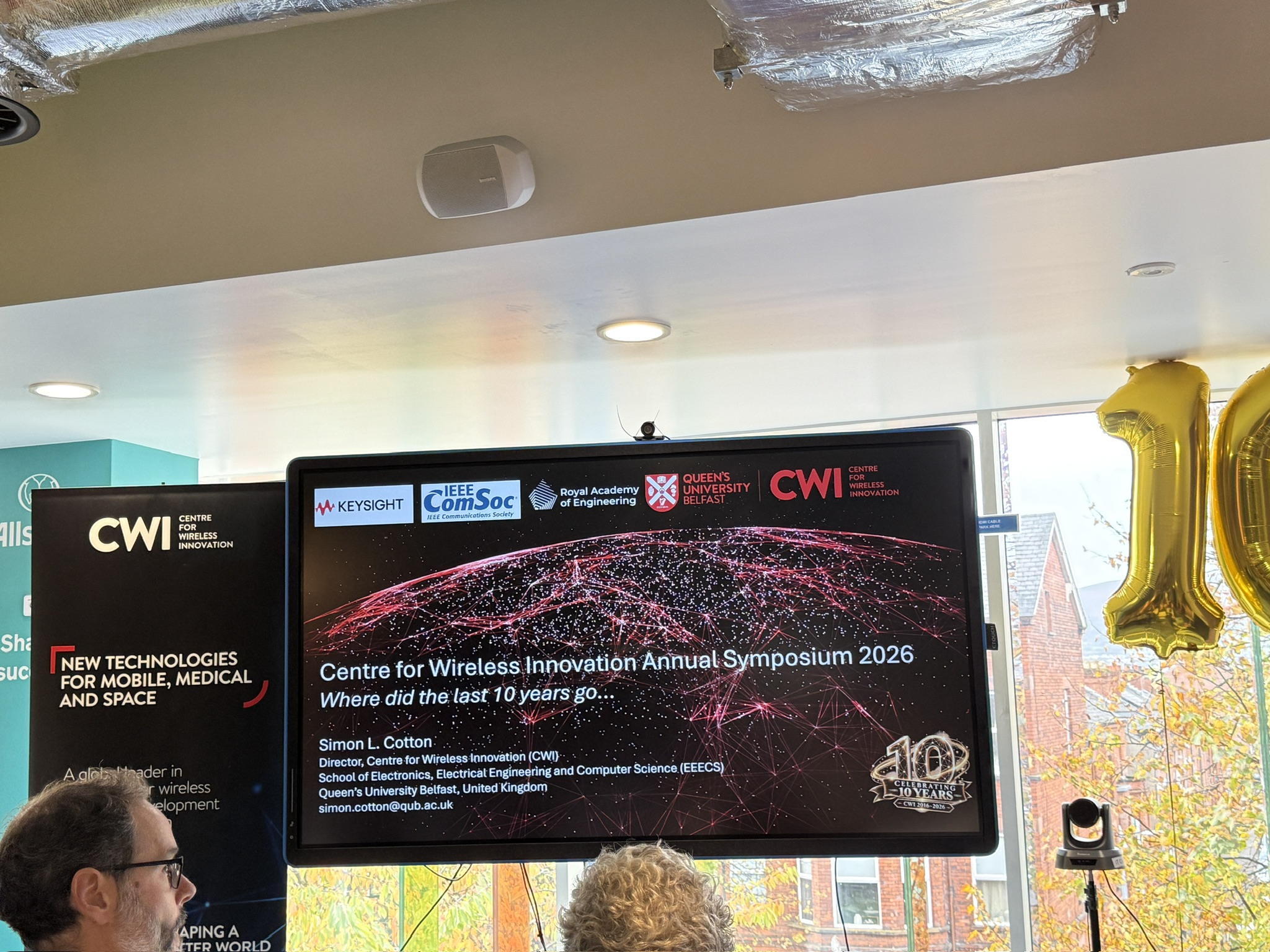
The Centre for Wireless Innovation (CWI) Annual Symposium 2026 took place in the Allstate Software Studio, Computer Science Building, Queen's University Belfast. Marking ten years of physical-layer wireless research and innovation, the programme opened with Professor Simon Cotton and combined invited talks with poster sessions and networking.
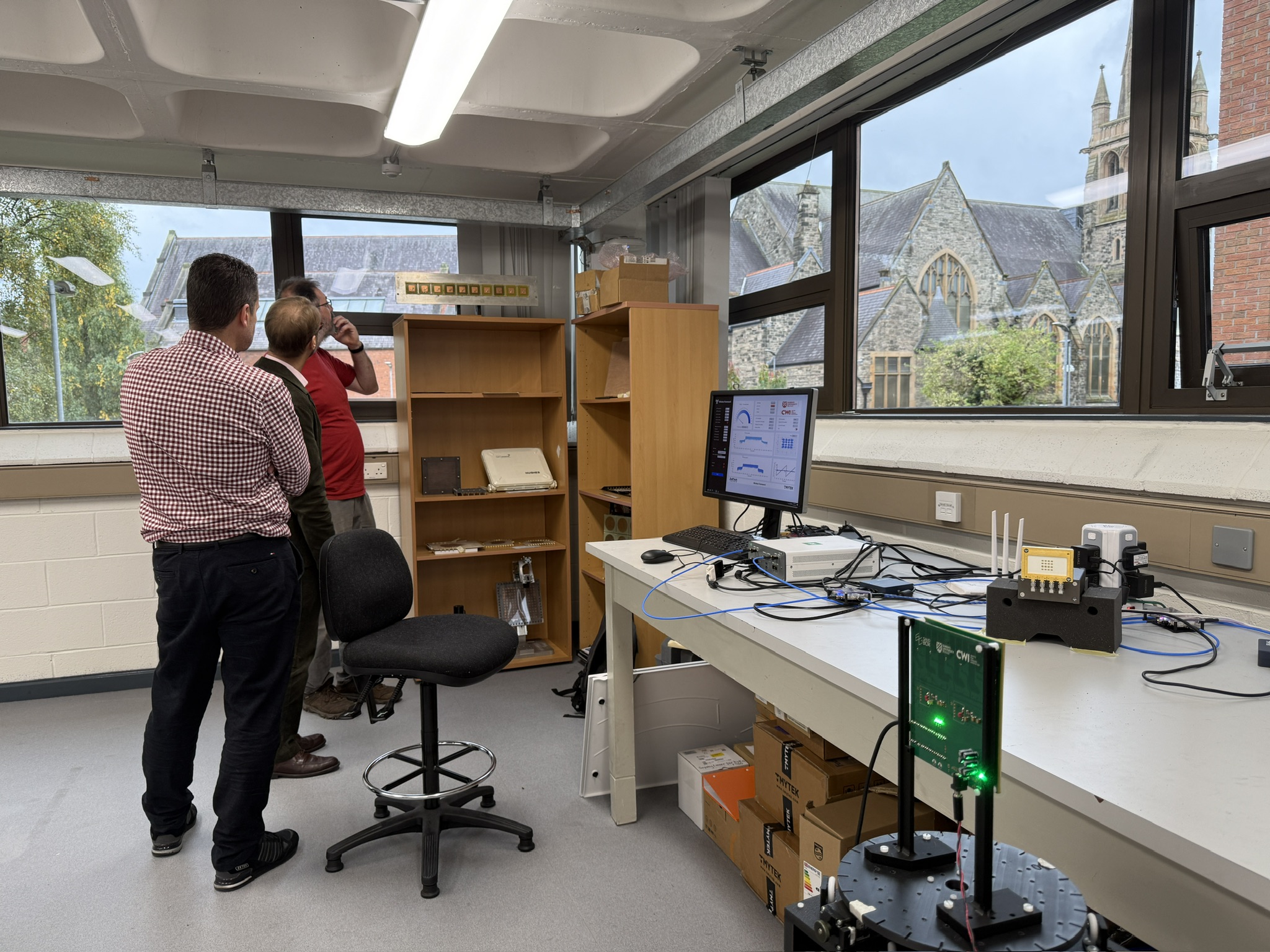
Across the day, the speakers approached 6G from complementary directions: network architecture, native AI, terrestrial and non-terrestrial systems, optical wireless, integrated sensing and communications (ISAC), experimental infrastructure, ultra-large MIMO, and learning-based methods.


Activity highlights
- Erik Nordell, Head of Ericsson Research UK, described Ericsson's work and priorities for 6G networks.
- Professor Holger Claussen of Tyndall Institute discussed native AI in 6G and how intelligence could be built into future network operation.
- Professor Harald Haas of the University of Cambridge connected terrestrial and non-terrestrial networking with ISAC and opportunities for optical wireless communication.
- Professor Dimitra Simeonidou of the University of Bristol introduced JOINER, linking experimental telecom capabilities across UK universities.
- Professor Lajos Hanzo of the University of Southampton discussed the potential role of quantum computing in 6G networks.
- Professor Christos Masouros of University College London, a pioneer in ISAC research, explored how communication signals can support sensing as well as connectivity.
- Professor Luca Sanguinetti of the University of Pisa discussed ultra-large MIMO and the scale of future antenna systems.
- Professor Elza Erkip of New York University discussed learning-based approaches to compression and relay networks.
- Radu Lupoaie of Keysight Technologies also joined the afternoon programme, alongside the poster and networking sessions.
Activity experience
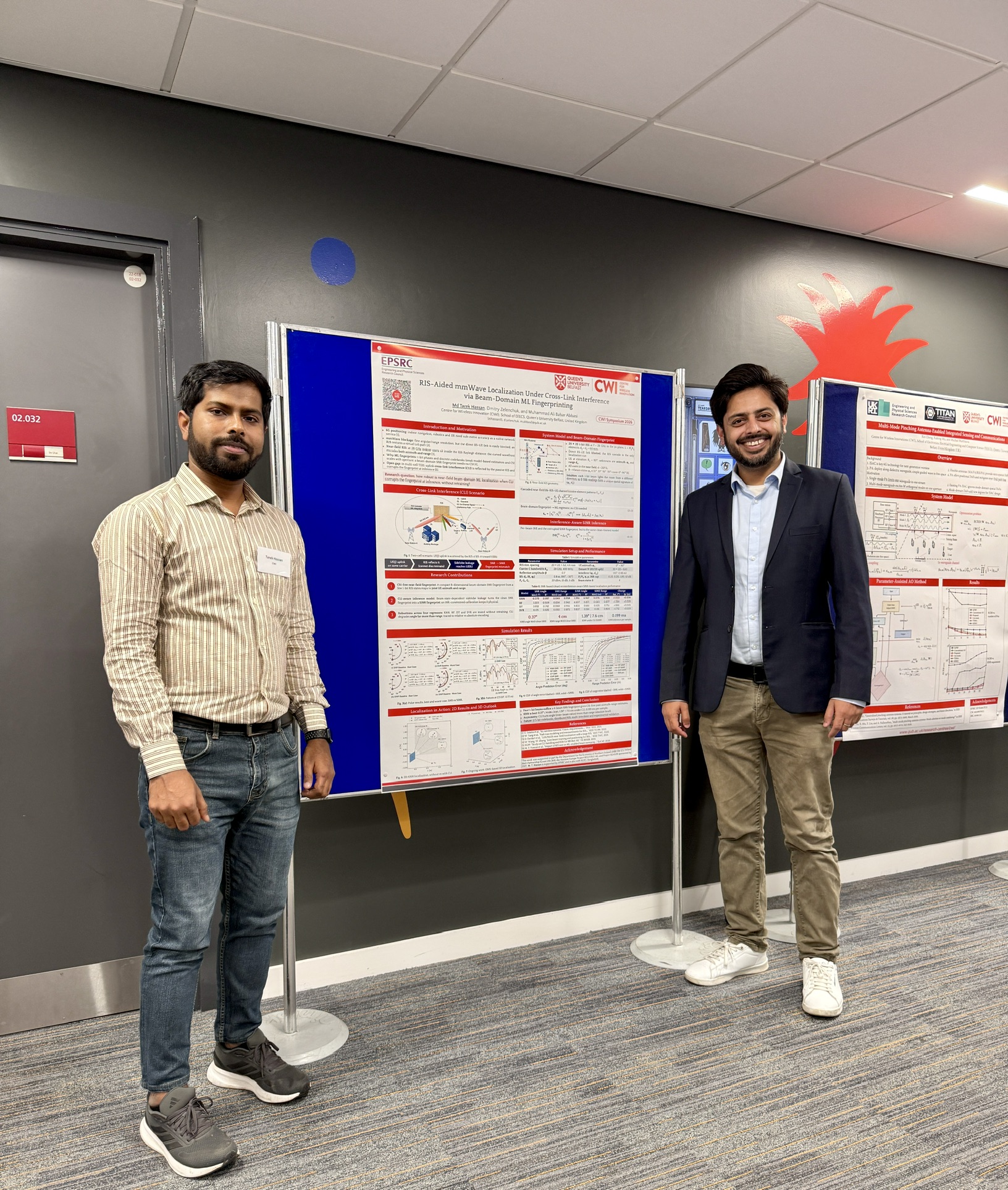
The symposium made the breadth of 6G research tangible: advances in radio hardware, algorithms, network intelligence, and experimental testbeds all need to work together. The talks provided useful context for my RIS-assisted localisation research and the conversations around my poster.